Where Will We Go When Times Get Tough?
It was March 2020 and my two boys and I had been living in our new home in Hayes, Bromley, for six months.
We didn't have a car, so I got to know the area on foot. I remember seeing photographs on Hayes Life Facebook group of families enjoying walks through the woods and thinking, "Where is this?"
So we went exploring. I had no idea then just how important those woods would become to me.
It was during this time that the country went into lockdown.
Like many people, I found it incredibly difficult. I was already working from home and now homeschooling my youngest son. I couldn't visit my elderly parents, I couldn't meet friends and I was suddenly living in a very different world. The only time I saw some of my new neighbours was when we stood outside our front doors and clapped for the NHS.
It was an incredibly isolating time.
Walking became one of the things that kept me going.
I walked every day. Sometimes because I needed to get out of the house. Sometimes because I needed some headspace. Sometimes I simply needed to be somewhere other than my four walls. Having the woods and open countryside so close to home made a huge difference.
Back then, I wasn't thinking about the science behind walking or the benefits of spending time in nature. I just knew that I felt better when I came home from a walk.
Years later, I understand much more about why.
Walking isn't just exercise
There are many reasons people are concerned about the proposed development at Hayes Farm. The impact on wildlife, biodiversity, horses, the Green Belt and the character of the area are all important.
But I want to talk about something that can sometimes get lost when we talk about planning and housing numbers.
Our wellbeing.
I now work in wellbeing and transformation coaching, and trained in trauma-informed somatic coaching. But this isn't simply a professional opinion.
I've experienced the difference myself.
There is growing evidence that spending time in nature and having access to green space can support both physical and mental wellbeing. The Government's People and Nature Survey found that 90% of adults who had visited a green or natural space in the previous 14 days agreed that spending time outdoors was good for their mental health.
But there is something about walking in nature that statistics don't really capture.
It's what you see.
It's what you hear.
It's what you discover.
It's how you feel when you're surrounded by trees rather than buildings.
And it's the unexpected things that happen along the way.
What we discover when we walk
When I walk with the women in my walking group, we're not simply counting kilometres or trying to hit a step target. We notice things.
We've discovered hidden rivers and little parts of the local landscape that many of us didn't even know existed.
We'll be walking and suddenly someone will stop because they've heard a woodpecker and we'll all stop too.
We listen.
We try to work out where the sound is coming from.
And sometimes we stand there for a moment just marvelling at it.
Those moments matter.
They bring us into the present. They give us something to notice beyond our phones, our work, our responsibilities and the thoughts that can occupy our heads.
And during the recent heatwaves, the woods have given us another reason to appreciate them.
The shade under the trees has meant that we've still been able to get out and walk when the heat has made other forms of exercise much less appealing. The woods have helped keep us cool enough to keep walking. This is what I mean when I talk about the wellbeing value of this landscape.
It isn't an abstract concept.
We use it.
We experience it.
And we treasure it.
"How lucky are we to have this on our doorstep?"
This is one sentence I hear more than almost any other after one of our walks:
"How lucky are we to have this on our doorstep?"
I hear it again and again.
And I think it says everything.
Because these woods and green spaces have become a significant and treasured part of the area for the people who live here.
They are not simply somewhere we pass through. They are somewhere we go to clear our heads.
To exercise.
To meet people.
To experience nature.
To escape the noise of everyday life for an hour or two.
And for some people, they become particularly important when life isn't going well.
Bromley itself recognises the value of its natural environment. The Council describes biodiversity and the natural world as supporting the health and wellbeing of residents, and its policies recognise the importance of protecting woodland, veteran trees and habitats.
The borough's own ecological evidence also records a network of diverse woodland, grassland, wetland and other habitats in the Hayes and surrounding area.
So this isn't simply about whether a piece of land looks green on a map. It is about what that landscape actually provides.
Walking became important to me. Then I realised how important it could be for other women.
In 2024, I started taking part in charity walks. I became more active, lost weight and over time, I was able to come off antidepressants.
I'm not saying walking was solely responsible for those changes. Life is more complicated than that. But walking became an important part of my own wellbeing and my relationship with myself.
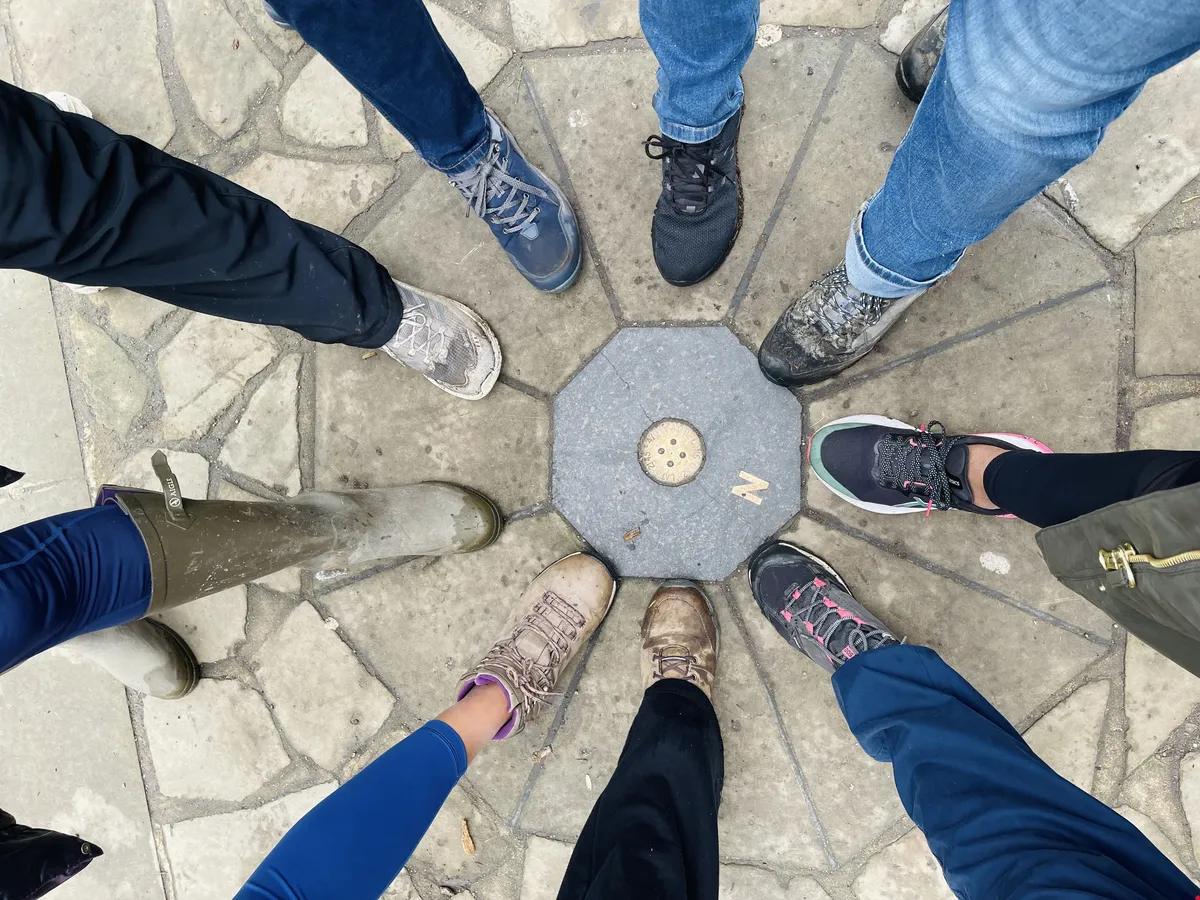
I wanted other women to experience some of those benefits too, so I started a walking group. What began with a simple idea has grown into a large local community of women who come together to walk, talk, laugh, get some fresh air and spend time outside.
I regularly receive messages from women telling me how much the walks have helped them.
Some tell me that they were struggling mentally and that getting outside gave them something to look forward to.
Some have felt lonely.
Some needed to get out of the house.
Some simply wanted to meet other women and make new friends.
Others tell me that walking has helped them feel more confident, more connected or more like themselves again.
These aren't statistics to me.
I see it happening every week.
This is why this proposal matters to me
There is a lot of discussion about the proposed development at Hayes Farm, which is now an application for up to 2,200 homes as part of the proposed Ravensbourne Place development.
But I think we also need to consider what already exists and what it currently provides to the people who live around it. When we look at a field, woodland or open landscape on a map, it can be easy to see it simply as land. But people don't experience it as a blank space. They experience it as somewhere they walk.
Somewhere their children explore.
Somewhere they see wildlife.
Somewhere they hear birdsong.
Somewhere they discover something new.
Somewhere they go when they need to clear their head.
Somewhere they meet a friend.
Somewhere they feel connected to the place they live.
That is a form of community infrastructure too.
We talk a lot about the need for new infrastructure when thousands of new homes are proposed. But we should also recognise the value of the infrastructure we already have. And this landscape is a significant part of that.
What about the children?
I think about the children who live and grow up around this area too.
I'm grateful that we moved into the area when we did because the nearby woods became a new playground for my then 10-year-old. It was somewhere he could explore, run around, discover things and simply be a child outdoors.
A child walking through the countryside and seeing horses, hearing birds and watching wildlife is experiencing something very different from walking through a built-up environment.
We encourage children to spend less time on screens.
We encourage them to be active.
We talk about the importance of connecting with nature.
We know that being outdoors can support our physical and mental wellbeing.
So what kind of environment do we want to leave for them?
I have seen that the proposals include walking and cycling routes, upgraded Public Rights of Way and areas such as a Woodland Edge and Riverside Park. I welcome the fact that opportunities for walking have been considered as part of the plans. But I think we also need to consider the experience of those walks.
A path through a new housing development is not the same experience as a path through woodland. When we walk in the woods now, we see trees. That's what surrounds us. We hear birds, stop when we hear a woodpecker, spot wildlife and discover hidden parts of the landscape, including little rivers and streams.
The proposed walking routes will form part of a new neighbourhood, so the experience of walking through them will inevitably be different from walking through the existing woods. The plans themselves describe homes, roads, public spaces and walking routes as part of the new neighbourhood, alongside areas intended to create a transition between new homes and existing woodland.
That isn't necessarily a criticism of the quality of those proposed paths. It is simply a recognition that a walking route and a walk in nature are not always the same thing. I think that distinction matters when we talk about the wellbeing benefits of walking in nature.
I'm not against homes being built. People need somewhere to live. Families need homes. Young people need opportunities to remain in the communities where they grew up.
But I do believe we have to ask where we build, how much we build and what we are prepared to lose in doing so. Because providing a walking path is not necessarily the same as preserving the natural environment and experience that people currently walk in.
I know what living alongside development feels like
There is another reason this issue is personal for me. Our house backed directly onto the most recent development of Hayes Farm where nine new houses were being built.
I experienced the demolition, the noise, the dust and the disruption that came with living immediately next to a construction site. The farm buildings were demolished before the houses were built, so I experienced the demolition phase as well as the subsequent construction.
At the time, I even researched the potential effects of living close to a demolition and construction site because I was experiencing it myself.
I remember my GP asking me:
"Why didn't you tell me this was going on around you?"
She was referring to the development, the noise, the dust and the disruption because she could see the significant effect that the environment around me was having on my mental health. That conversation stayed with me.
Research has found associations between high levels of noise annoyance and poorer mental health, including anxiety and depression, although researchers are appropriately cautious about the strength and limitations of the evidence.
I don't need a research paper to tell me that living alongside prolonged demolition and construction can be difficult. I experienced it and my experience was with nine houses.
The Ravensbourne Place proposal is on an entirely different scale.
This is why I think we need to consider not just what will be built, but what people living nearby will experience during the construction and importantly, what will remain afterwards.
What happens when we lose the places we rely on?
We often talk about creating new green spaces as part of housing developments and new green infrastructure is important.
Berkeley Homes’s current proposals include publicly accessible open space, new trees, play areas, a riverside park and new walking and cycling routes, but there is a difference between creating something new and losing something that already exists.
A mature landscape, established habitats, trees, wildlife and familiar walking routes cannot simply be recreated overnight.
Bromley has a significant woodland resource, with the Council identifying 2,181 hectares of woodland across the borough and recognising woodland as an important resource for biodiversity and the wider environment.
That existing natural environment has taken time to develop and for those of us who use it, it has also become part of the identity of the area.
Where will we go when times get tough?
That is the question I keep coming back to.
When I was struggling during lockdown, I didn't need another screen and I didn't need another four walls. I needed to get outside.
I needed trees, open space, fresh air and somewhere I could walk and I needed that space to be close enough to home that I could access it. Years later, I now see other women using these same spaces to support their own wellbeing.
They come walking when life is difficult.
They come when they're lonely.
They come when they're stressed.
They come because they need to talk.
They come because they need not to talk.
They come because they want to move their bodies and be outside.
And they come because they feel lucky to have this on their doorstep.
"How lucky are we to have this on our doorstep?"
It's a simple sentence, but perhaps that's exactly why it matters, because sometimes the things that support our wellbeing aren't complicated.
They're the trees we walk beneath.
The sound of a woodpecker.
A hidden river we didn't know was there.
The shade of the woods on a hot day.
A conversation with another woman.
A familiar walking route.
A place where we can breathe.
These things have value.
And I believe we need to recognise that value before we lose it.
So as decisions are made about the new development, I hope the wellbeing of the existing community is considered alongside the many other issues being raised about this proposal.
Because green space isn't just something that looks nice on a planning map.
For many of us, it is part of how we live.
And sometimes, when life gets tough, it is part of how we cope.
Written by Janette Miller, Wellbeing Practitioner and Transformation Coach and Founder of Hayes Ladies Walking Club


